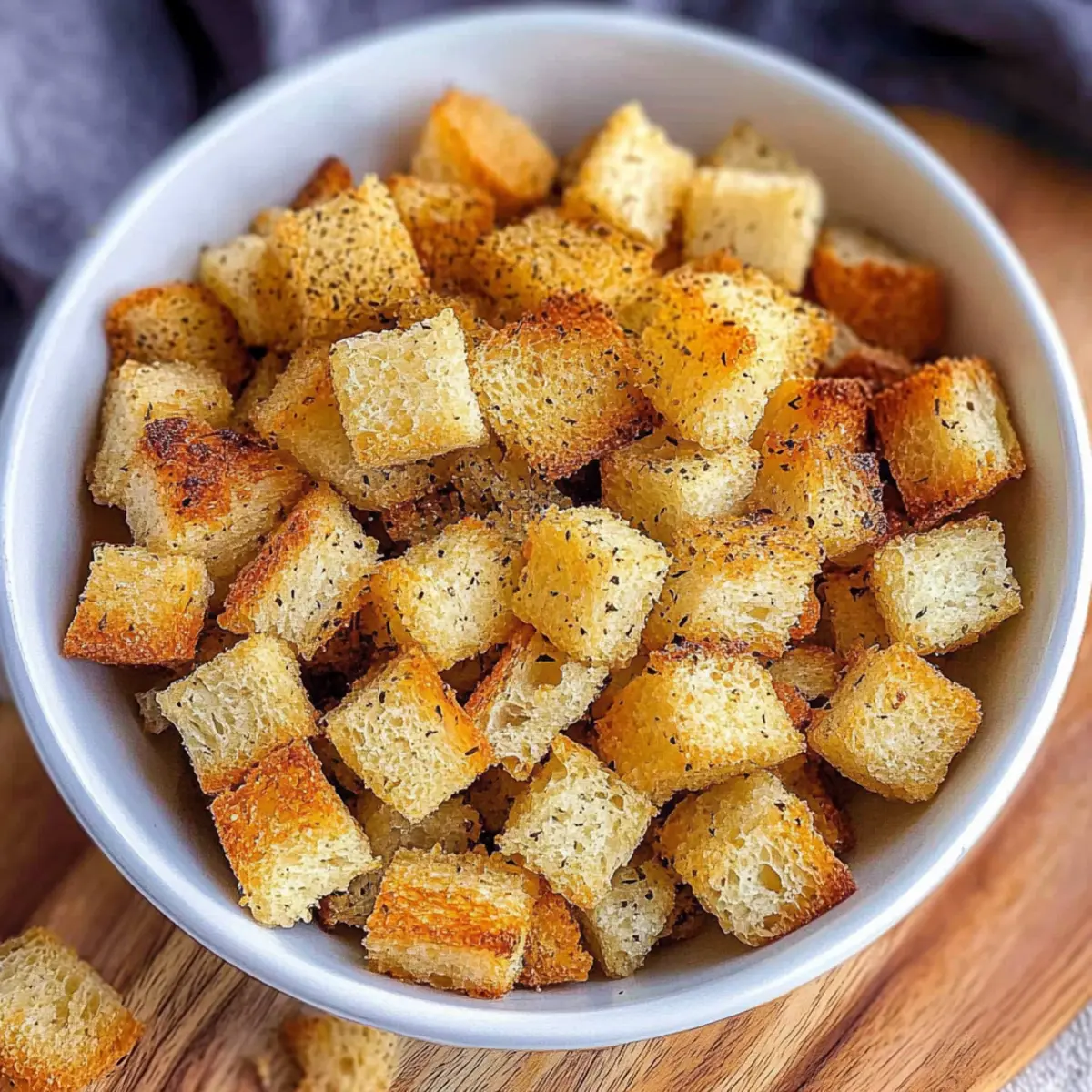
Level Up Your Salads: The Secret To Irresistible Homemade Croutons
Imagine a simple green salad transformed into a culinary masterpiece, or a comforting bowl of soup elevated with an unexpected burst of texture. The secret? Perfectly crunchy, flavor-packed
homemade croutons. For too long, we've settled for the dry, often bland, bagged varieties found in grocery store aisles. But what if we told you that unlocking a world of superior taste and crunch is incredibly easy, highly customizable, and a fantastic way to rescue your forgotten bread?
Homemade croutons aren't just a topping; they're an experience. They offer that delightful crisp exterior with a hint of chewiness inside, infused with herbs and richness that store-bought versions simply can't replicate. Once you discover the simple magic of making them yourself, you'll wonder why you ever did it any other way. Prepare to turn humble bread into golden, crispy jewels that will undoubtedly become a staple in your kitchen.
Why Homemade Croutons Are a Culinary Game Changer
The difference between mass-produced croutons and their homemade counterparts is night and day. Where store-bought options are often dry, dusty, and uniformly tasteless, homemade croutons deliver an unparalleled burst of flavor and a satisfying texture that elevates any dish. This isn't mere exaggeration; it's a culinary truth that transforms your meals.
First and foremost, it's about control. When you make croutons at home, you dictate every aspect – from the type of bread to the quality of fat and the blend of seasonings. This level of customization means you can tailor them perfectly to your palate or to complement a specific dish, something entirely impossible with pre-packaged varieties. Craving a garlicky punch? Add more garlic powder. Prefer a subtle herby note? Adjust your Italian seasoning blend. The power is yours.
Beyond taste, texture is king. Store-bought croutons are often baked to a bone-dry crisp to maximize shelf life, stripping away any natural moisture. This results in a hard, sometimes stale-tasting cube. Homemade versions, however, can be baked to your preferred level of crispness – a golden brown with a delightful crunch that still retains a slight, tender interior. This perfect balance creates an almost addictive quality, making them not just a topping, but a delicious snack all on their own. As referenced on Sally's Baking Addiction, it's a "crispy, crunchy toasted exterior with a slightly chewy interior," a far cry from the entirely desiccated nature of many commercial options.
Finally, homemade croutons are an ingenious solution for reducing food waste. That loaf of sourdough nearing its prime, the baguette that's gone a little stiff, or even leftover sandwich bread – all can be repurposed into magnificent croutons. Instead of discarding perfectly good bread, you're transforming it into a valuable ingredient, saving money and adding value to your meals. It’s a win-win for your wallet and the environment. For more ideas on how to utilize your leftover bread, check out our guide on
Don't Waste Bread! Make Delicious Customizable Homemade Croutons.
The Simple Magic Behind Perfect Homemade Croutons: Ingredients Unveiled
At its core, a homemade crouton is simply cubed bread, tossed with fat and seasonings, and then baked until golden and crisp. But understanding the role of each ingredient allows you to truly master the art and customize to your heart's content.
The Bread: Foundation of Flavor
This is where your crouton journey begins. The beauty is that almost any bread will work! Stale bread is actually preferred, as it absorbs the oil and seasonings better and crisps up more effectively.
- Sourdough: Offers a robust, tangy flavor and a fantastic chewy texture.
- French or Italian Baguette/Loaf: Classic choice, yielding light and airy croutons with a crisp crust.
- Ciabatta: Known for its open, airy texture, which results in wonderfully crunchy croutons.
- Sandwich Bread (e.g., Wonderbread): A surprising contender that creates lighter, softer croutons, perfect for delicate soups.
- Artisan Breads: Often dense and flavorful, providing a substantial crouton.
Don't be afraid to experiment with what you have on hand. The key is to cut your bread into relatively uniform cubes (around ¾ to 1 inch) to ensure even cooking.
The Fat: Crispness and Richness
The fat is crucial for achieving that coveted golden crispness and for carrying the flavors of your seasonings.
- Olive Oil: Our top recommendation. It provides a healthy richness and helps the croutons crisp up beautifully without becoming greasy. Its fruity notes complement most seasoning blends.
- Melted Butter: For an undeniably decadent and rich flavor. Butter can brown faster, so keep an eye on your croutons if using it. You can also do a 50/50 blend of olive oil and melted butter for the best of both worlds.
- Avocado Oil: A neutral-tasting, high-smoke-point alternative that's great for health-conscious choices.
The amount of fat is important. Too little, and your croutons will be dry and bland. Too much, and they'll be oily. A good rule of thumb is about 2 tablespoons per 4 cups of bread cubes.
The Seasoning: Your Flavor Playground
This is where you infuse your croutons with personality. While the classic Italian seasoning blend is a fantastic starting point, don't hesitate to venture out!
- Italian Seasoning: A harmonious blend of dried herbs like thyme, marjoram, basil, oregano, and rosemary. It's versatile and pairs well with almost anything.
- Garlic Powder: A non-negotiable for most savory croutons. It provides that essential aromatic kick. You can even use garlic salt and adjust your added salt accordingly.
- Dried Parsley: Adds a fresh, green herb note and a touch of visual appeal. Can be substituted with more Italian seasoning or other dried herbs.
- Salt & Freshly Cracked Black Pepper: Essential flavor enhancers that make all the other ingredients pop. Freshly cracked pepper always offers superior aroma and bite.
- Beyond the Basics:
- Smoked Paprika: For a subtle smoky depth.
- Onion Powder: Adds another layer of savory aroma.
- Cajun or Old Bay Seasoning: For a zesty, spicy kick.
- Parmesan Cheese: Toss with grated Parmesan after baking for a cheesy, savory crunch.
- Rosemary & Thyme: A rustic, earthy blend perfect for soups.
Step-by-Step Guide to Your Best Batch of Homemade Croutons
Making homemade croutons is astonishingly simple and takes less than 30 minutes from start to finish. Here’s how to do it:
Step 1: Prep Your Bread
Start by cutting your bread into uniform ¾ to 1-inch cubes. Uniformity is key here for even cooking. If your cubes are wildly different in size, some will burn while others remain soft. Place your bread cubes into a large mixing bowl. Drizzle generously with your chosen fat, typically olive oil.
Step 2: Season and Toss
Now, sprinkle your desired seasonings over the bread cubes. Start with Italian seasoning, garlic powder, salt, and freshly cracked black pepper. If you’re feeling adventurous, add a dash of smoked paprika or a pinch of dried rosemary. Toss everything together thoroughly. You want every single bread cube to be lightly coated in oil and seasoning. Use your hands for the best coverage! This ensures maximum flavor in every bite.
Step 3: Bake to Golden Perfection
Spread the seasoned bread cubes in a single layer on a large baking sheet. Avoid overcrowding the pan; if the cubes are piled up, they’ll steam instead of crisp. Use two baking sheets if necessary. Bake in a preheated oven (usually around 375°F / 190°C) for 15-20 minutes, stirring them halfway through. Keep a close eye on them towards the end, as they can go from perfectly golden to burnt very quickly. You're looking for a beautiful golden-brown color and a firm, crispy texture. Once baked, remove them from the oven and let them cool on the pan for about 10 minutes. This residual heat helps them crisp up even further. For a comprehensive look at making crispy, seasoned croutons, explore our article:
Easy Homemade Croutons: Crispy, Seasoned & Better Than Store-Bought.
Beyond the Salad Bowl: Creative Uses for Your Crunchy Creations
While
homemade croutons are an undisputed star in any salad (especially a classic Caesar!), their utility extends far beyond the humble bowl of greens.
*
Soups and Stews: Sprinkle them generously over creamy tomato soup, hearty lentil stew, or a French onion soup instead of traditional bread. Their crunch provides a wonderful textural contrast.
*
Thanksgiving Stuffing/Dressing: They form the perfect foundation for a flavorful holiday stuffing, absorbing broths and seasonings beautifully.
*
Panzanella Salad: This Italian bread salad specifically calls for sturdy bread pieces, making homemade croutons an ideal choice.
*
Snack Time: Honestly, a bowl of freshly made, still-warm croutons is a ridiculously addictive snack. Just try to stop at one!
*
As a Garnish: Crush them lightly and use them as a crunchy topping for casseroles, pasta dishes, or even roasted vegetables.
*
Eggs: Add them to scrambled eggs or sprinkle over a frittata for an unexpected crunch.
Once cooled completely, store your homemade croutons in an airtight container at room temperature for up to a week. They retain their crunch remarkably well, ready to elevate your next meal.
Embrace the Crunch: Your Journey to Better Meals Starts Here
Say goodbye to disappointing, dry store-bought croutons forever. Making
homemade croutons is a simple yet profoundly rewarding kitchen skill that elevates everyday meals into something special. It's a testament to the power of fresh ingredients, mindful preparation, and the joy of creating something delicious from scratch. With endless possibilities for customization and a myriad of uses, these golden, crunchy morsels are more than just a topping—they're a cornerstone of flavorful, resourceful cooking. So grab that leftover bread, preheat your oven, and prepare to level up your culinary game, one irresistible crouton at a time.